Bill Pay
Keeping Rates Stable During the Winter Cold Snap
When extreme winter weather swept across the Carolinas in late January and early February, natural gas demand surged across multiple states at once. As temperatures dropped well below seasonal averages, homes and businesses relied heavily on heating systems — and the wholesale natural gas market reacted quickly.
You may have seen news about other gas utilities in the region adjusting their rates to recover higher wholesale costs.
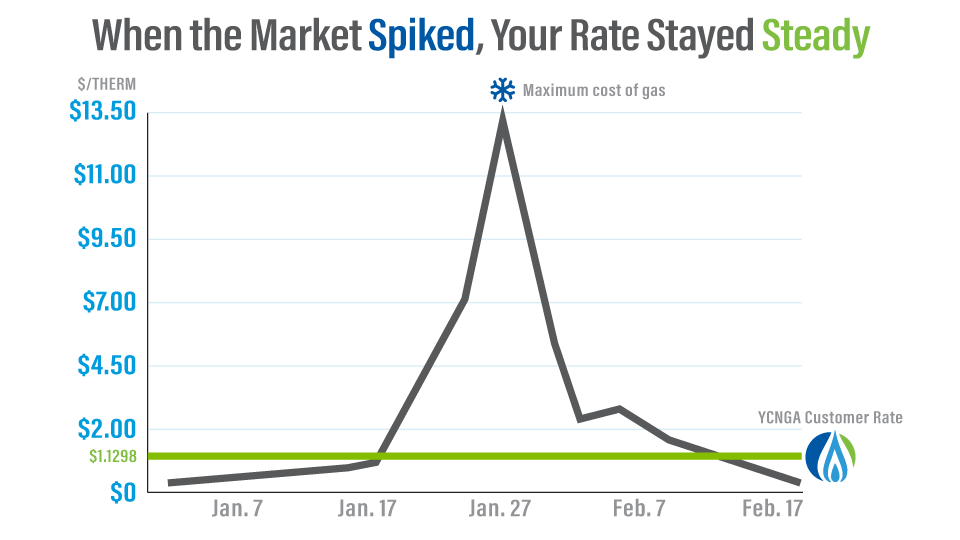
At York County Natural Gas Authority, however, your residential rate has remained stable. The Preferred Residential (year-round) rate is $1.1298 per therm, which is within the same range ($1.12 – $1.13) we’ve maintained since 2022. Here’s why.
What Happened in the Market?
During the cold snap, daily natural gas market prices spiked dramatically.
When temperatures fall sharply:
- Demand for natural gas rises quickly.
- Utilities across several states must secure additional supply.
- Distributors often have to purchase gas above and beyond their planned or budgeted volumes.
- Those additional purchases are frequently made on the spot market — where prices can be significantly higher during peak demand.
In short: the colder it gets across a large region, the more competitive (and expensive) it becomes to secure supply.
What Does “Delivered Price” Mean?
You may hear the term delivered price when energy markets are discussed.
Here’s a simple breakdown:
- NYMEX price is the benchmark commodity trading price.
- Wellhead price reflects the cost at the production site.
- Delivered price is the all-in cost to get natural gas from the production basin to your local utility — including transportation, storage, pipeline capacity, and supply charges.
During extreme cold events, pipeline constraints and regional demand can cause delivered prices to rise even faster than benchmark commodity prices.
That delivered price is what utilities ultimately pay to secure the gas that heats homes and businesses.
How YCNGA Planned Ahead
YCNGA uses a diversified, proactive supply strategy designed to reduce exposure to sudden market swings. These strategies include:
- Price hedging portions of natural gas supply in advance
- Maintaining access to stored natural gas supply
- Utilizing peaking services during high-demand periods
- Leveraging prepay transactions and long-term purchasing strategies
- Strategically releasing unused capacity to maximize revenue
By planning for peak-demand scenarios ahead of time, we reduce the need to make large, high-cost spot purchases during extreme weather.
“Cold weather events like this demonstrate how quickly supply and demand dynamics can shift,” said Jeff Deason, Chief Financial Officer. “Our responsibility is to anticipate those swings and position our portfolio in a way that protects customers from sudden rate shocks.”
Why Your Bill May Still Be Higher
Even when rates remain stable, bills can increase during extreme cold simply because usage increases.
- When outdoor temperatures drop, your heating systems normally run for longer periods of time.
In other words, higher bills during extreme cold are typically driven by usage, not a rate increase.
A Not-for-Profit Model Focused on You
York County Natural Gas Authority was created by an Act of the South Carolina General Assembly in 1954 and operates as a political subdivision of the State.
We:
- We do not generate profits for shareholders.
- Cannot levy or collect taxes
- Cannot pledge the credit of any other government entity
- Finance improvements through revenue bonds repaid solely from system revenues
- Reinvest all net revenues into system expansion or rate reduction
Our structure allows us to prioritize long-term affordability and reliability for the communities we serve.
Our Commitment
Energy markets can be volatile — especially during extreme weather. Our focus remains steady.
“We exist to serve our customers — not shareholders,” Deason added. “Every financial decision we make is centered on reliability, affordability, and protecting the people and businesses of York and Cherokee Counties.”