Bill Pay
Community Effort Saves Hundreds of Endangered Sunflowers in South Carolina
Originally shared by U.S. Fish & Wildlife Service
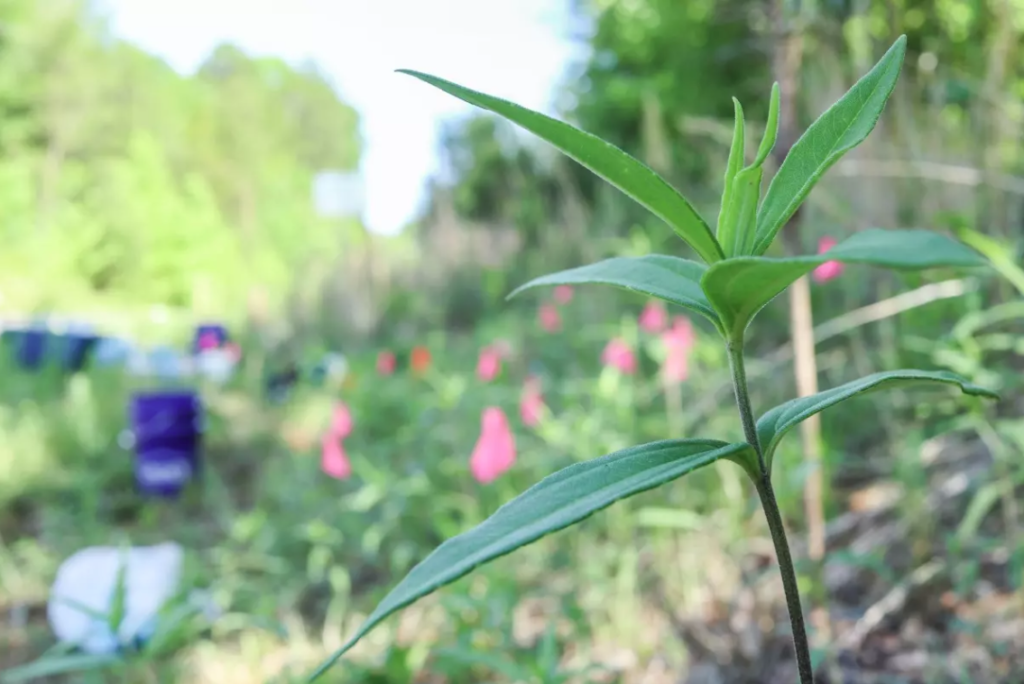
Rock Hill, S.C. – More than 500 endangered Schweinitz’s sunflowers are now conserved at York County’s Catawba Bend Preserve, thanks to staff from York County, the Catawba Nation, York County Natural Gas Authority, and the U.S. Fish and Wildlife Service.
“What we saw unfold in York County to protect those endangered plants was a model of imperiled species conservation. Those sunflowers are part of what makes York County unique, and the community showed up in a tremendous way to take care of them,” said Melissa Chaplin, biologist with the U.S. Fish and Wildlife Service.
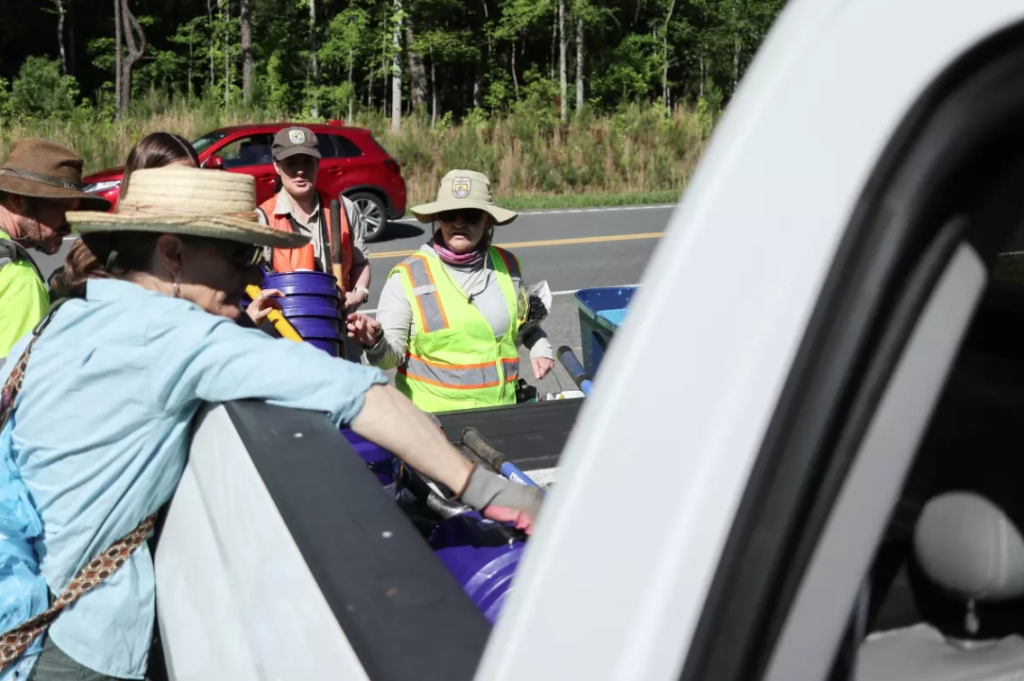
In August 2025, Chaplin, who is based in Charleston, S.C., received an e-mail from Marvin Bouknight, then the natural resources program manager with the Catawba Nation. Because of his work at Catawba Nation, and being familiar with the species, Bouknight was aware of a population growing along the shoulder of Church Road. He and fellow tribal biologist Courtney Skeldon had even been out to count them. While driving Church Road one day, he was caught off guard by the sight of tiny, white survey flags running through the population. Stopping to investigate, he saw the flags belonged to the York County Natural Gas Authority, leading him to cold call the authority, reaching Marc Fortner, project manager for the gas pipeline installation that was marked by the flags, and beginning a conversation about how to conserve the sunflowers.
“Marc was nothing but supportive of the entire effort to conserve the sunflowers. You could not have asked for a better partnership – the gas authority was on-board from the get-go and worked with us to conserve the plants. Without their cooperation, it never would’ve happened,” said Bouknight.
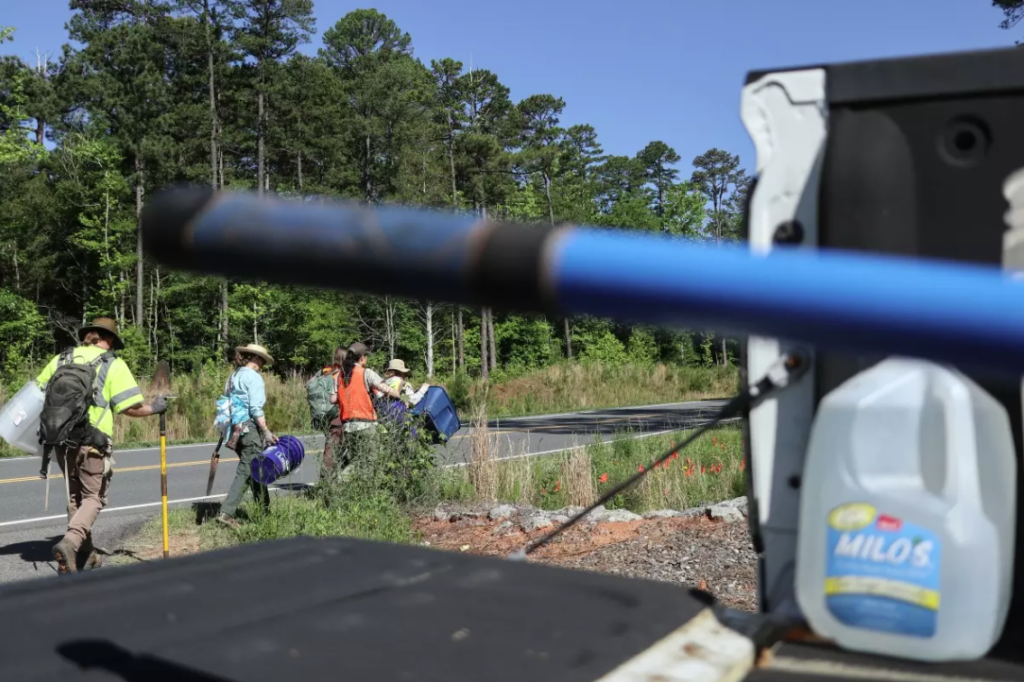
Initially it seemed the plants were safe as the plan was to bore the gas line beneath the plants, without disturbing the surface, but as the project developed, it became evident going beneath the plants wouldn’t be an option – a trench would have to be dug through the sunflowers. A new strategy was needed, so Bouknight broadened the conversation. With the help of staff at the South Carolina Department of Natural Resources, he connected with Chaplin, who works in the U.S. Fish and Wildlife Service office that administers the Endangered Species Act in South Carolina. During this period, Bouknight joined York County Parks and Recreation Department as superintendent of Catawba Bend Preserve, with Courtney Skeldon taking over his role with the tribe. With York County Parks and Recreation, York County Natural Gas Authority, the Catawba Nation, and the U.S. Fish and Wildlife Service all represented around the table, conversation turned to moving the plants out of the gas line footprint to a place where they would enjoy long-term protection. Catawba Bend Preserve, a new park located in and operated by York County, was chosen as the destination.
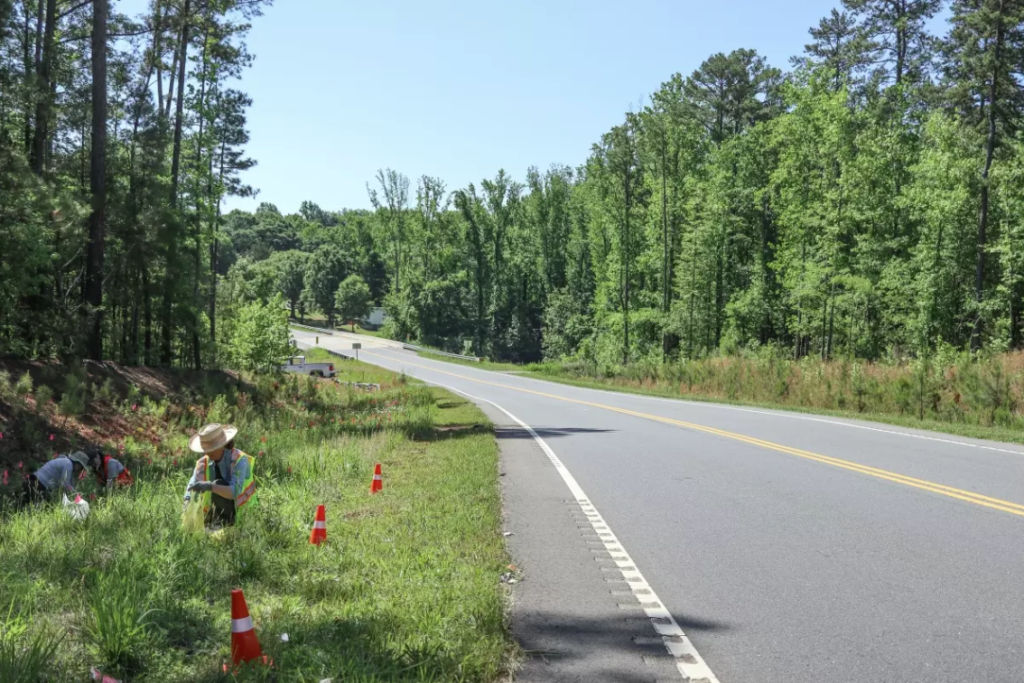
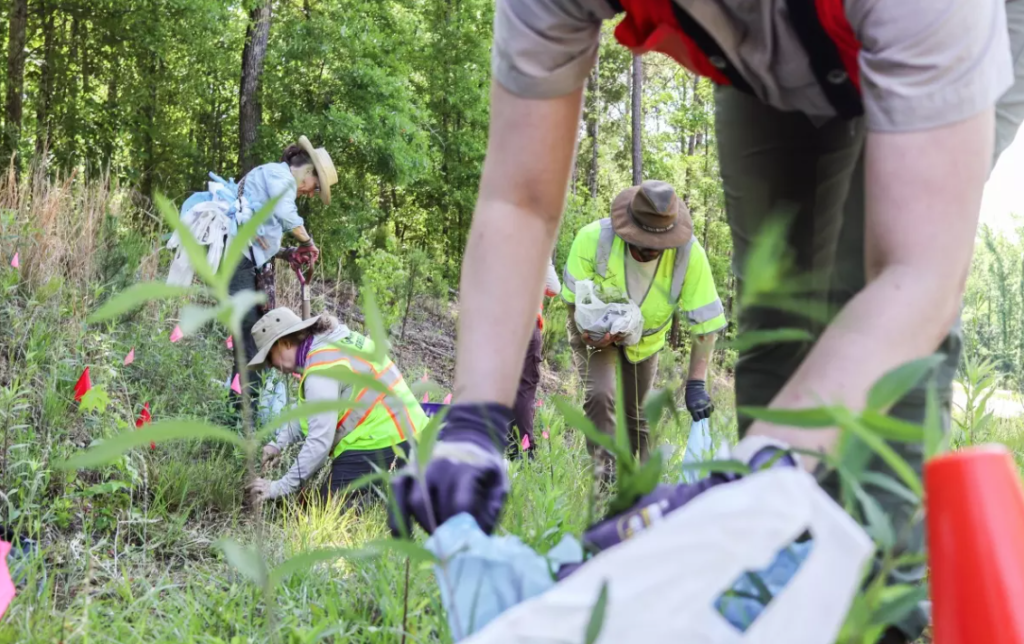
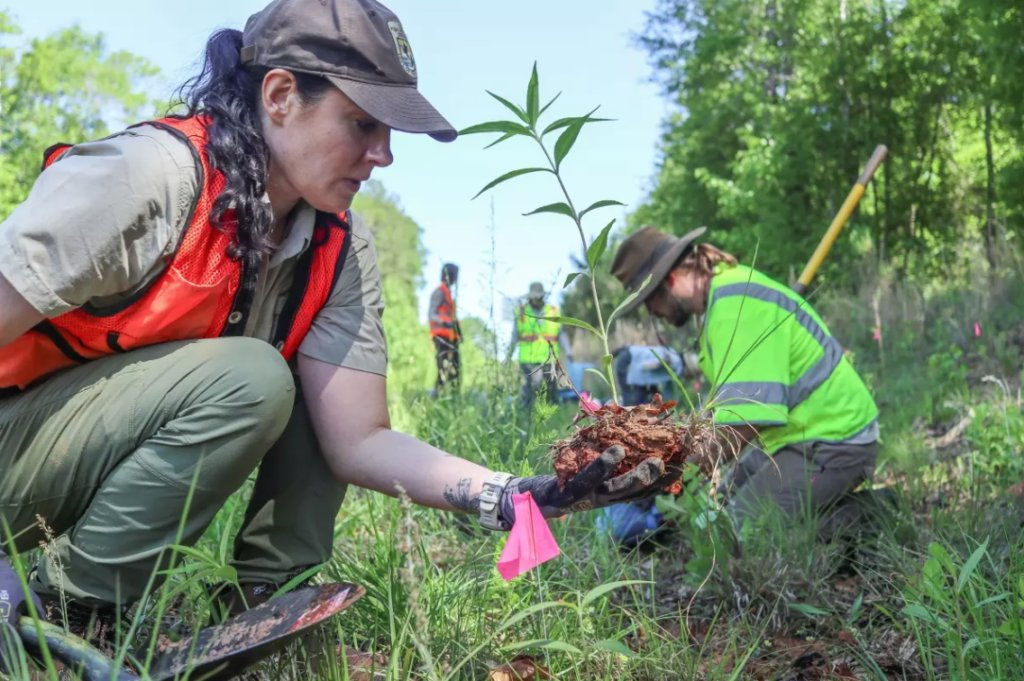
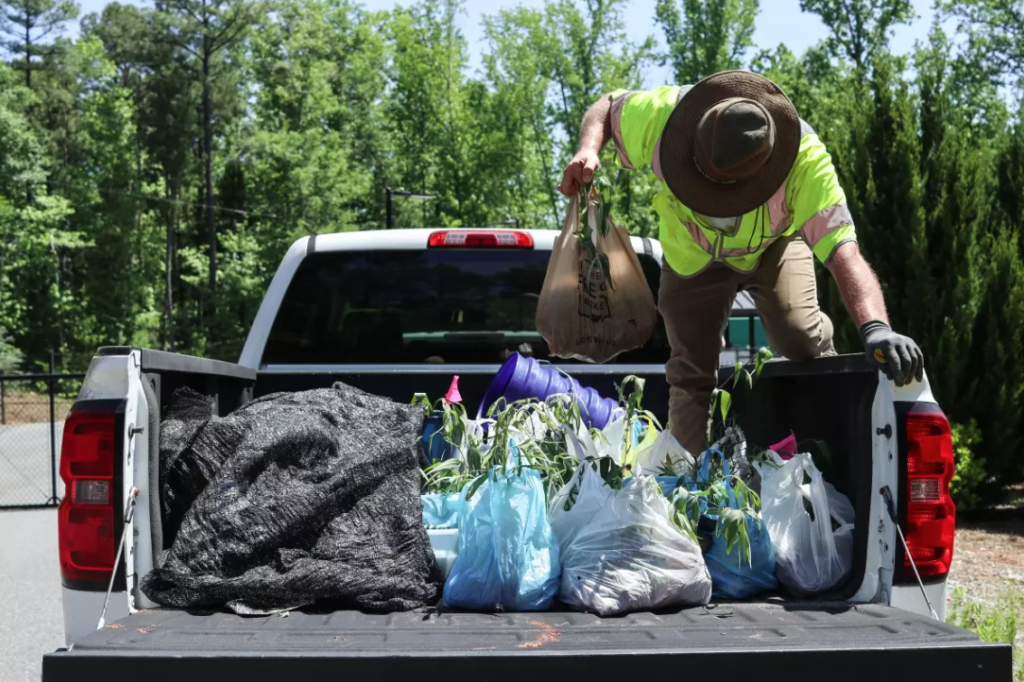
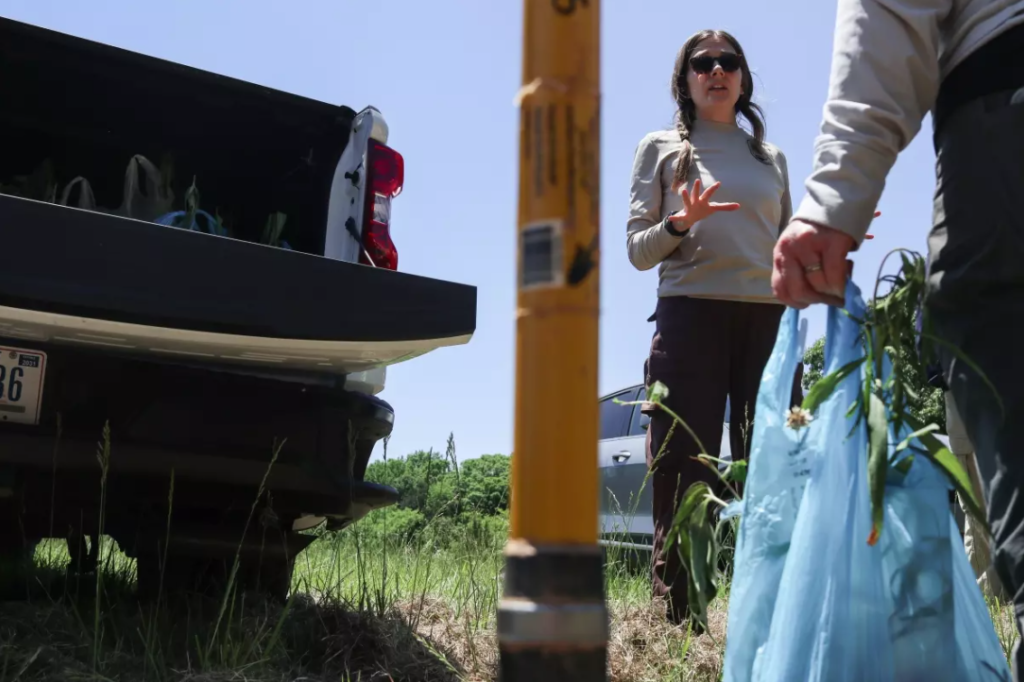
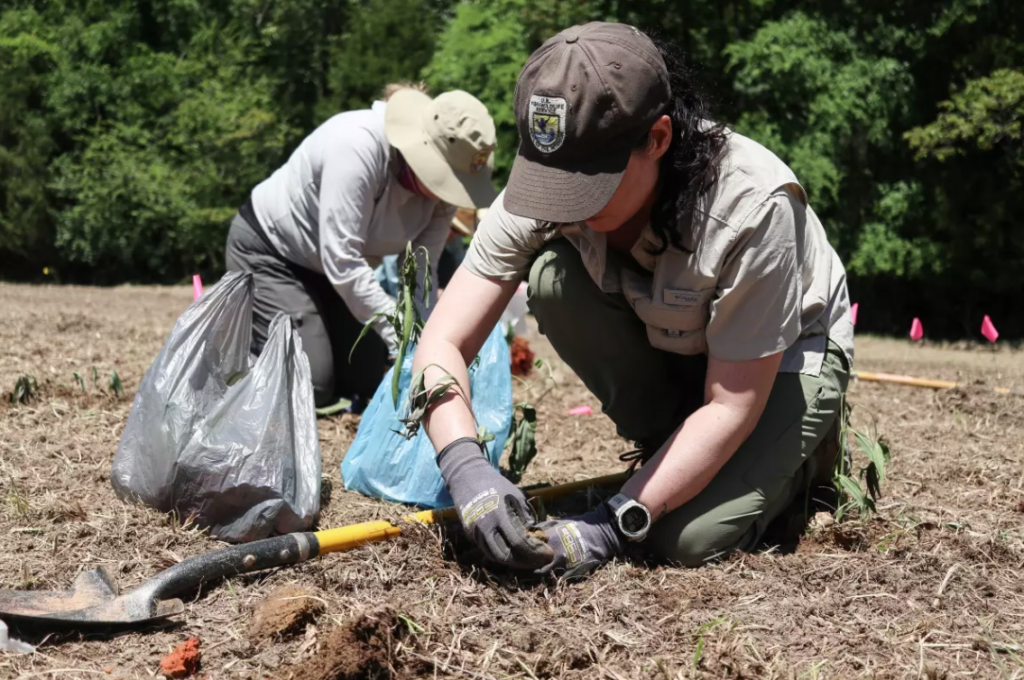
Over four hot days in late spring and early summer, teams from York County Parks and Recreation, the Catawba Nation, and the Service transplanted more than 500sunflowers, digging them from the shoulder of Church Road and planting them at Catawba Bend Preserve, where the maintenance team had plowed a dedicated area to receive the plants. County staff used two portable water tanks to provide regular watering as a counter to drought conditions. To minimize the effects of deer and rabbit browsing, they installed a solar electric fence to give the plants the best chances of survival
“Nothing like this happens because of one person,” said Bouknight. “It happens because passionate, dedicated folks see the value. This was elective from the start – nothing was mandated. It reminds me that there are still good people and organizations out there that care about our natural resources.”
Schweinitz’s sunflower is found only in the Piedmont of North Carolina and South Carolina and is considered an indicator of prairie remnants. It has been on the federal endangered species list since 1991, when only 13 populations were known to exist, though today that number has increased to 94.